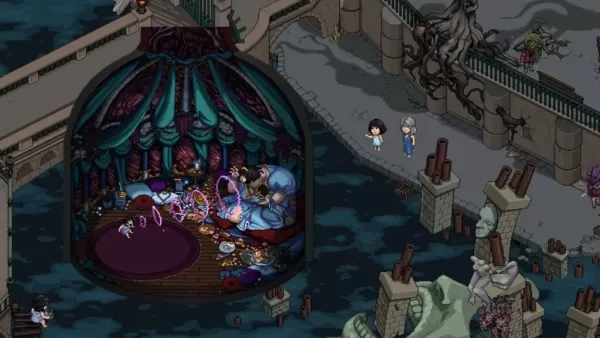
Decarnation is more than just a game—it’s a haunting, introspective journey into the fractured psyche of its protagonist, Gloria, a once-bright cabaret dancer adrift in the emotional ruins of her 1990s Parisian life. At its core, Decarnation is a psychological horror puzzle experience that blurs the line between dream and nightmare, reality and self-deception.
The Story: A Descent Into the Mind’s Theater
Gloria’s world shatters when her career collapses, her lovers abandon her, and she’s left grappling with an identity she no longer recognizes. In this state of emotional collapse, a mysterious benefactor appears—offering her a chance to return to the spotlight, to shine once more on stage.
She accepts.
But the offer comes with a price: to perform, she must enter a surreal, ever-shifting version of a theatre that exists only in her mind. This is no ordinary stage. It is a living, breathing manifestation of her subconscious—where memories twist, emotions take shape, and past traumas wear the masks of monsters.
As Gloria navigates this labyrinthine world, she confronts not external enemies, but the inner demons she’s spent years running from:
- Shame, embodied as a looming, half-dissolved dancer in a mirror.
- Loneliness, a hollow figure draped in tattered velvet, endlessly reciting forgotten lines.
- Self-doubt, a shifting corridor of eyes and whispers that question her worth.
- Denial, a glowing, beautiful face that pleads: “You don’t have to face this.”
Each puzzle is not just a test of logic, but a metaphor for emotional growth. Solving them means accepting parts of herself she once tried to bury. The game doesn’t reward brute force—it rewards reflection, surrender, and truth.
Art and Atmosphere: Beauty in the Broken
The game’s pixel art is both elegant and unnerving, evoking the decadence of Parisian nightlife while dripping with decay. Neon lights flicker like dying memories. Paintings peel into static. The stage curtains ripple with memories not her own.
The soundtrack—minimalist, ambient, with faint echoes of music hall melodies—adds to the dreamlike dread. It’s the sound of a soul unraveling, not in chaos, but in quiet, unbearable clarity.
Influences & Themes: A Soul’s Reckoning
Decarnation draws heavy inspiration from:
- Satoshi Kon’s Perfect Blue – the blurring of identity and performance.
- David Lynch’s Mulholland Drive – dream logic, surreal imagery, and psychological unraveling.
- Carl Gustav Jung – the idea of the shadow self, the confrontation with the unconscious.
It’s a game about what happens when you stop running from yourself. There’s no grand villain. No final battle. Just Gloria, alone on a stage with no audience, forced to perform the most difficult role of all: being real.
Final Thoughts: Why It Resonates
Decarnation doesn’t seek to entertain in the traditional sense. It seeks to unsettle, to mirror, to heal. It’s not about surviving horror—it’s about understanding it.
For players who’ve ever felt lost in their own identity, haunted by past choices, or trapped by the roles they’ve played—this game offers a strange kind of solace. In the end, the final performance isn’t for an audience. It’s for the version of Gloria who’s been hiding in the wings.
"You don’t have to believe in yourself to be real. You just have to stop pretending you’re not."
Decarnation is available now on Android and iOS via the Google Play Store for $3.99.
It’s not a game you play. It’s one you live through.
And if you’re ready to face the truth in the mirror—the show is about to begin.
 最新のダウンロード
 Downlaod




 トップニュース