Maison > Nouvelles > "Guide: changer la langue Palico dans Monster Hunter Wilds"

"Guide: changer la langue Palico dans Monster Hunter Wilds"

By ZacharyApr 24,2025

Avez-vous déjà été surpris par votre propre chat à la maison parlant en langue humaine? Dans * Monster Hunter Wilds *, votre Palico pourrait vous donner la même sensation étrange, mais ne vous inquiétez pas - vous pouvez facilement changer sa langue en fonction de votre préférence. Voici comment personnaliser les paramètres de langue de votre Palico dans * Monster Hunter Wilds *.

Changer la langue de votre Palico dans Monster Hunter Wilds
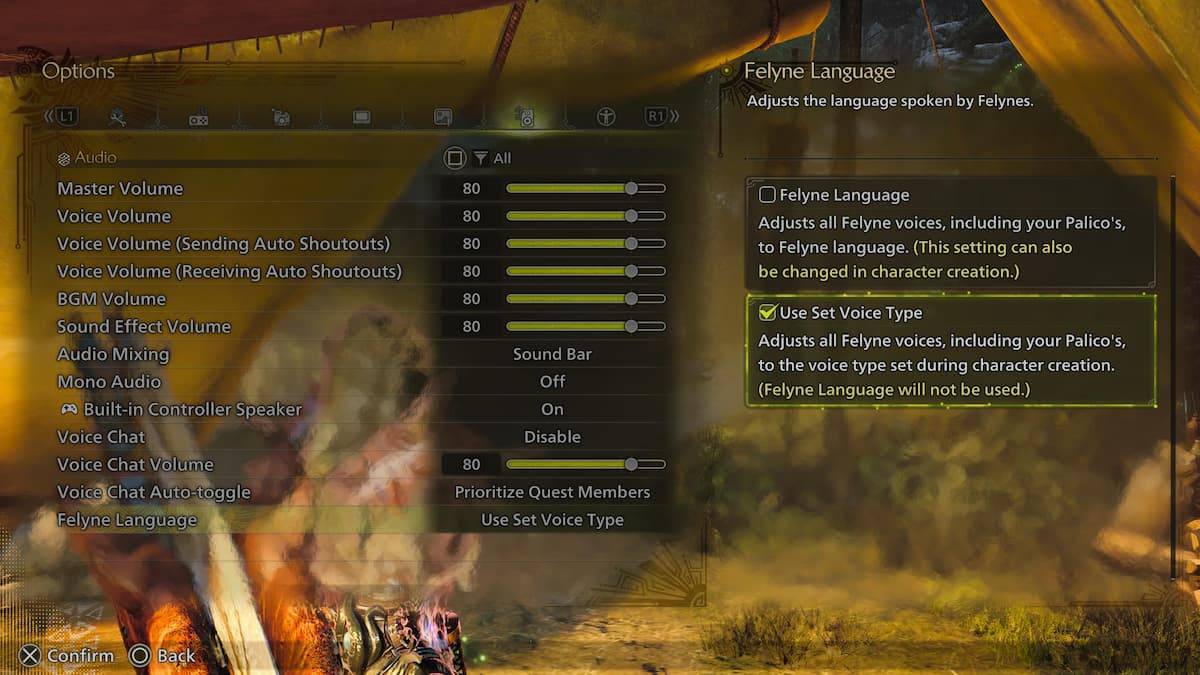
Monster Hunter Wilds - Paramètres de langue Palico

Il existe deux façons simples d'ajuster la langue de votre Palico dans * Monster Hunter Wilds *: à travers les paramètres du jeu ou via le créateur de personnage.

Pour modifier la langue via les paramètres du jeu, appuyez sur le bouton Options pour ouvrir le menu, accédez aux paramètres du jeu, puis sélectionnez l'onglet Audio. Recherchez l'option de langue Palico, où vous pouvez choisir entre:

  • Langue Felyne: votre Palico communiquera en utilisant des miaules et des ronronnements. Vous devrez garder un œil sur les sous-titres pour comprendre ce qu'il dit, qui peut ajouter une couche de charme et d'immersion à votre gameplay.
  • Définir le type de voix: votre Palico parlera dans la langue sur laquelle votre jeu est défini. Cela peut être plus pratique, en particulier pendant les batailles intenses lorsque vous avez besoin d'une communication rapide.

Alternativement, vous pouvez accéder au créateur de personnages en vous dirigeant vers votre tente et en le sélectionnant dans le menu. Tout en modifiant l'apparence de votre Palico, vous pouvez également opter pour qu'elle parle en langue Felyne. De plus, vous avez la flexibilité de modifier son pas vocal et son ton si le paramètre actuel ne correspond pas tout à fait à votre goût.

N'oubliez pas que changer la langue de votre Palico n'a aucun impact sur les mécanismes de gameplay, alors n'hésitez pas à choisir l'option qui convient le mieux à votre expérience de jeu. Bien que la langue Felyne puisse être plus immersive et attachante, s'appuyer sur des sous-titres peut être un peu lourd. D'un autre côté, faire parler votre Palico dans votre langue maternelle peut être plus pratique, en particulier dans la chaleur de la bataille.

C'est tout ce que vous devez savoir sur l'ajustement de la langue de votre Palico dans * Monster Hunter Wilds *. Pour plus de conseils et d'informations détaillées sur le jeu, assurez-vous de consulter l'escapiste.

Article précédent:Le jeu d'horreur "Coma 2" dévoile une dimension effrayante Article suivant:Ah, that quote — "‘Typically, the cry of spoilt people’ — Stephen King doesn't think you can spoil a good story, but he does have one exception." — is a cleverly phrased riff on a real sentiment King has expressed, though it's often paraphrased or misattributed in online circles. Let’s unpack it. Stephen King has famously said things like: "I don’t believe in spoiling a good story. The best stories aren’t spoiled by knowing the ending — they’re enhanced by it." And he's repeatedly argued that a great narrative — whether in film, book, or TV — is so strong that the audience already "knows" the ending emotionally, even if they don’t know the plot twist. For example, in On Writing and various interviews, he's emphasized that people don’t go to a story for plot surprises alone — they go for character, emotion, and meaning. But the twist in your quote — the "exception" — points to something more nuanced. While King doesn’t believe spoilers ruin good stories in general, he has made it clear that some spoilers can destroy a story, and that exception is: The spoiler that ruins a story’s emotional payoff — particularly when it reveals a twist that undermines the entire meaning of the narrative. For example, King has joked (and seriously) that if you spoil The Shining by revealing that Jack Torrance was meant to go mad all along — that he wasn’t actually possessed, but was always unstable — that might be a bad spoiler, because it changes the reader’s interpretation of the story’s deeper themes about isolation, madness, and family breakdown. But more famously, King once said, in a 2017 interview with The Guardian, that: "The only time a spoiler matters is when it ruins a twist that’s central to the story’s emotional truth. If you spoil that, you’ve broken the spell." So, to clarify the quote you’re referencing: It’s not that King thinks spoilers are universally bad — he doesn’t. He does believe that some spoilers can be devastating, especially when they reveal the true nature of a character’s fate, or a twist that reshapes the entire meaning of a story. So the "exception" he acknowledges? 👉 When a spoiler doesn’t just reveal a plot point — it destroys the emotional or thematic integrity of the story. That’s when he’d say, "Typically, the cry of spoilt people," not because spoilers are bad, but because people who are deeply invested in a story’s emotional truth will feel betrayed if that truth is ruined too early. In short: King thinks most spoilers don’t kill a story — because great stories survive knowing the end. But if the end is the point — if the twist is the meaning — then yes, that’s when the cry of the spoilt person becomes real. And that’s the exception. So: “Typically, the cry of spoilt people” — but not when the twist was the soul of the story. Then, it’s not just spoilt… it’s tragic.