Maison > Nouvelles > Simulateur de vie du canard en caoutchouc par Placid Plastic

Simulateur de vie du canard en caoutchouc par Placid Plastic

By DanielApr 03,2026

Simulateur de vie du canard en caoutchouc par Placid Plastic

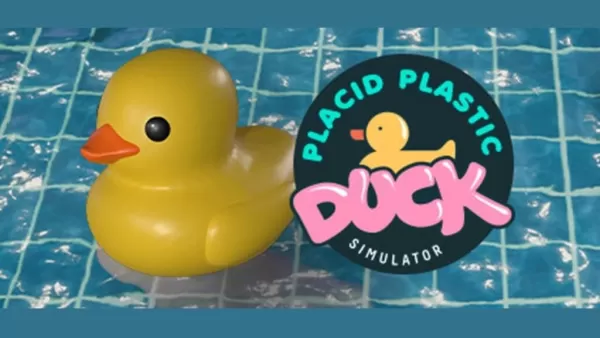
Turbolento Games lance son jeu de simulation innovant de canard en caoutchouc pour les utilisateurs Android - Placid Plastic Duck Simulator. Cette expérience unique vous permet simplement d’observer un canard en plastique flottant doucement à la surface d’une piscine. Initialement lancé sur Netflix l’année dernière, la version Android existe désormais comme une application indépendante.

Placid Plastic Duck Simulator : Une Relaxation Étonnamment Authentique

Le jeu ne requiert rien d’autre que votre attention détendue. Imaginez-vous arriver à une piscine en bord de mer où vous flottez sans effort. Progressivement, des canards compagnons vous rejoignent, chacun affichant une apparence distincte et une personnalité excentrique. Il s’agit essentiellement de vous immerger dans une sérénité paisible.

L’écran Collection permet de personnaliser les canards en leur donnant un nom - ces étiquettes flottent au-dessus d’eux comme des rêveries à la dérive. Qu’elles soient humoristiques ou inattendues, lors des intenses vagues de chaleur estivales, ce simulateur offre précisément l’évasion tranquille dont vous pourriez rêver.

Les alentours se transforment dynamiquement autour de vous - la lumière du jour faiblit, les étoiles apparaissent, tandis que des mélodies radiophoniques nostalgiques jouent jusqu’à ce que vous préfériez écouter le doux clapotis des vagues.

À l’aube revenue, vous passez en douceur à une autre piscine. Des avions lointains pourraient strier le ciel, mais votre seule responsabilité reste une bienheureuse inactivité.

Avec 50 canards au design unique, certains présentent des comportements amusants lorsqu’ils entrent en collision avec des objets de la piscine ou entre eux.

Le simple fait d’observer peut débloquer l’un des 15 succès disponibles. Un instant capture l’admiration du coucher de soleil ; le suivant pourrait révéler un OVNI inattendu planant au-dessus de votre havre aquatique.

Avec deux piscines à explorer et une communauté grandissante de compagnons flottants, Placid Plastic Duck Simulator offre une sérénité qui en vaut la peine. Disponible sur le Google Play Store pour 1,99 $, vous pouvez prévisualiser l’expérience ici même !

Avant de partir, découvrez notre prochain article mettant en lumière l’adaptation Android optimisée pour mobile du jeu de rôle policier Disco Elysium.

Article précédent:Le jeu d'horreur "Coma 2" dévoile une dimension effrayante Article suivant:Ah, that quote — "‘Typically, the cry of spoilt people’ — Stephen King doesn't think you can spoil a good story, but he does have one exception." — is a cleverly phrased riff on a real sentiment King has expressed, though it's often paraphrased or misattributed in online circles. Let’s unpack it. Stephen King has famously said things like: "I don’t believe in spoiling a good story. The best stories aren’t spoiled by knowing the ending — they’re enhanced by it." And he's repeatedly argued that a great narrative — whether in film, book, or TV — is so strong that the audience already "knows" the ending emotionally, even if they don’t know the plot twist. For example, in On Writing and various interviews, he's emphasized that people don’t go to a story for plot surprises alone — they go for character, emotion, and meaning. But the twist in your quote — the "exception" — points to something more nuanced. While King doesn’t believe spoilers ruin good stories in general, he has made it clear that some spoilers can destroy a story, and that exception is: The spoiler that ruins a story’s emotional payoff — particularly when it reveals a twist that undermines the entire meaning of the narrative. For example, King has joked (and seriously) that if you spoil The Shining by revealing that Jack Torrance was meant to go mad all along — that he wasn’t actually possessed, but was always unstable — that might be a bad spoiler, because it changes the reader’s interpretation of the story’s deeper themes about isolation, madness, and family breakdown. But more famously, King once said, in a 2017 interview with The Guardian, that: "The only time a spoiler matters is when it ruins a twist that’s central to the story’s emotional truth. If you spoil that, you’ve broken the spell." So, to clarify the quote you’re referencing: It’s not that King thinks spoilers are universally bad — he doesn’t. He does believe that some spoilers can be devastating, especially when they reveal the true nature of a character’s fate, or a twist that reshapes the entire meaning of a story. So the "exception" he acknowledges? 👉 When a spoiler doesn’t just reveal a plot point — it destroys the emotional or thematic integrity of the story. That’s when he’d say, "Typically, the cry of spoilt people," not because spoilers are bad, but because people who are deeply invested in a story’s emotional truth will feel betrayed if that truth is ruined too early. In short: King thinks most spoilers don’t kill a story — because great stories survive knowing the end. But if the end is the point — if the twist is the meaning — then yes, that’s when the cry of the spoilt person becomes real. And that’s the exception. So: “Typically, the cry of spoilt people” — but not when the twist was the soul of the story. Then, it’s not just spoilt… it’s tragic.