Maison > Nouvelles > Comment rechercher et filtrer les créatures dans l'inventaire Pokémon Go

Comment rechercher et filtrer les créatures dans l'inventaire Pokémon Go

By AllisonMar 21,2025

Jouer à Pokémon va pendant un certain temps et a accumulé plusieurs Pokémon, dont des rares? Votre inventaire est-il un gâchis? Alors apprenez à maîtriser l'outil de recherche! Ce guide vous montrera comment utiliser votre barre de recherche d'inventaire efficacement et organisé.

Résumé

  • Concentrez-vous sur ce que vous aimez le plus
  • Utilisez les balises
  • Faites attention à IV
  • Recherche de pokémon et de compétences individuelles

Concentrez-vous sur le jeu que vous aimez le plus

Avant d'organiser, demandez-vous: "Avec quel Pokémon dois jouer avec?" et "Quel genre de contenu je préfère?" La définition des priorités aidera à identifier les Pokémon vraiment importants. Certains peuvent être rares, mais si vous ne les utilisez pas, les garder visibles dans l'inventaire peut ne pas être nécessaire.

Pokémon Go

Balises

Dans l'inventaire, utilisez la fonction "tag". Créez des balises pour séparer les Pokémon utiles de l'inutile. Séparez votre favori, les plus rares, ceux que vous utilisez dans les batailles, etc. L'important est d'utiliser les balises commodément pour * vous *.

Considérez également Tague Pokémon pour les évolutions futures et celles fortes dans l'objectif actuel (rappelez-vous que l'objectif change souvent!).

Pokémon Go

Faites attention à IV

Gardez les Pokémon avec IV 4 et IV 3 car ils peuvent être utiles à l'avenir. Dans la barre de recherche, tapez "* 4" ou "* 3" pour les trouver.

Ne jetez pas Pokémon qui peut gagner en pertinence dans l'objectif! Consultez les statistiques des joueurs expérimentés pour prendre des décisions éclairées.

Recherche et compétences individuelles de Pokémon en inventaire

Pour trouver un type spécifique, tapez le nom dans la barre de recherche. Pour Pokémon avec les modificateurs d'attaque ou de défense 1, tapez "1atach" ou "1defesa".
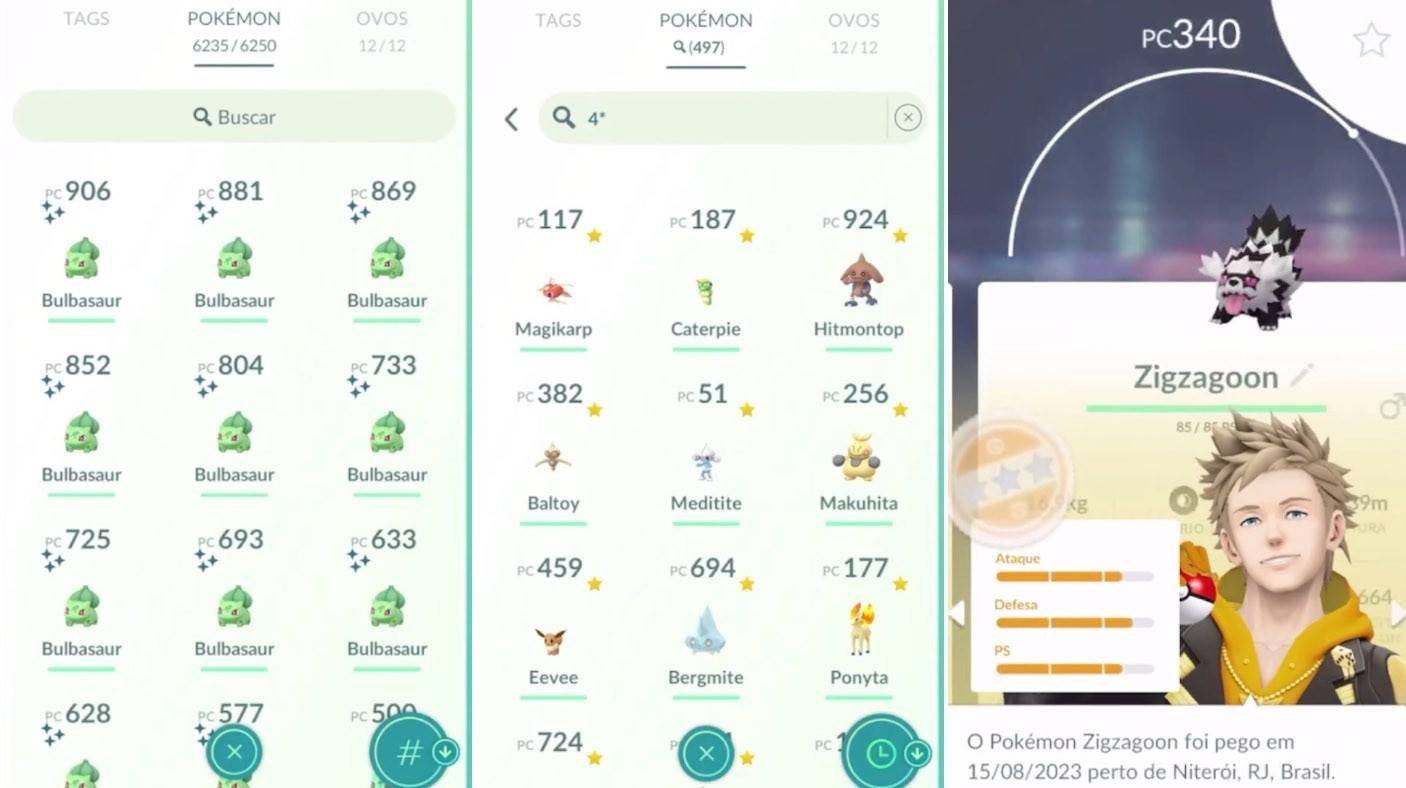
Inventaire Pokémon Go

Pour Pokémon prêt à évoluer, utilisez "Type & Evolve". Par exemple, "Dark & ​​Evolve" montrera que Pokémon de type sombre est prêt à évoluer. Ajoutez une balise pour les garder visibles.

Vous avez oublié le nom? Utilisez "+" avant le nom de la forme non confirmée (par exemple "+ pikachu"). Le jeu montrera toute la ligne évolutive.
Pokémon Go

Pour Pokémon d'une région spécifique, tapez le nom de la région. Utilisez "@" pour des paramètres spécifiques. "@ 3tipo" montre le meilleur Pokémon de vitesse d'attaque dans un type spécifique. "@habilité" montrera Pokémon avec une capacité spécifique.
Pokémon Go

Vous pouvez également rechercher par numéro Pokédex.

La fonction de recherche est puissante et simplifie l'organisation de son inventaire. Avec ce guide, vous pouvez organiser votre Pokémon efficacement et pratiquement!

* Image principale: enseignement.com *

Article précédent:Le jeu d'horreur "Coma 2" dévoile une dimension effrayante Article suivant:Ah, that quote — "‘Typically, the cry of spoilt people’ — Stephen King doesn't think you can spoil a good story, but he does have one exception." — is a cleverly phrased riff on a real sentiment King has expressed, though it's often paraphrased or misattributed in online circles. Let’s unpack it. Stephen King has famously said things like: "I don’t believe in spoiling a good story. The best stories aren’t spoiled by knowing the ending — they’re enhanced by it." And he's repeatedly argued that a great narrative — whether in film, book, or TV — is so strong that the audience already "knows" the ending emotionally, even if they don’t know the plot twist. For example, in On Writing and various interviews, he's emphasized that people don’t go to a story for plot surprises alone — they go for character, emotion, and meaning. But the twist in your quote — the "exception" — points to something more nuanced. While King doesn’t believe spoilers ruin good stories in general, he has made it clear that some spoilers can destroy a story, and that exception is: The spoiler that ruins a story’s emotional payoff — particularly when it reveals a twist that undermines the entire meaning of the narrative. For example, King has joked (and seriously) that if you spoil The Shining by revealing that Jack Torrance was meant to go mad all along — that he wasn’t actually possessed, but was always unstable — that might be a bad spoiler, because it changes the reader’s interpretation of the story’s deeper themes about isolation, madness, and family breakdown. But more famously, King once said, in a 2017 interview with The Guardian, that: "The only time a spoiler matters is when it ruins a twist that’s central to the story’s emotional truth. If you spoil that, you’ve broken the spell." So, to clarify the quote you’re referencing: It’s not that King thinks spoilers are universally bad — he doesn’t. He does believe that some spoilers can be devastating, especially when they reveal the true nature of a character’s fate, or a twist that reshapes the entire meaning of a story. So the "exception" he acknowledges? 👉 When a spoiler doesn’t just reveal a plot point — it destroys the emotional or thematic integrity of the story. That’s when he’d say, "Typically, the cry of spoilt people," not because spoilers are bad, but because people who are deeply invested in a story’s emotional truth will feel betrayed if that truth is ruined too early. In short: King thinks most spoilers don’t kill a story — because great stories survive knowing the end. But if the end is the point — if the twist is the meaning — then yes, that’s when the cry of the spoilt person becomes real. And that’s the exception. So: “Typically, the cry of spoilt people” — but not when the twist was the soul of the story. Then, it’s not just spoilt… it’s tragic.