

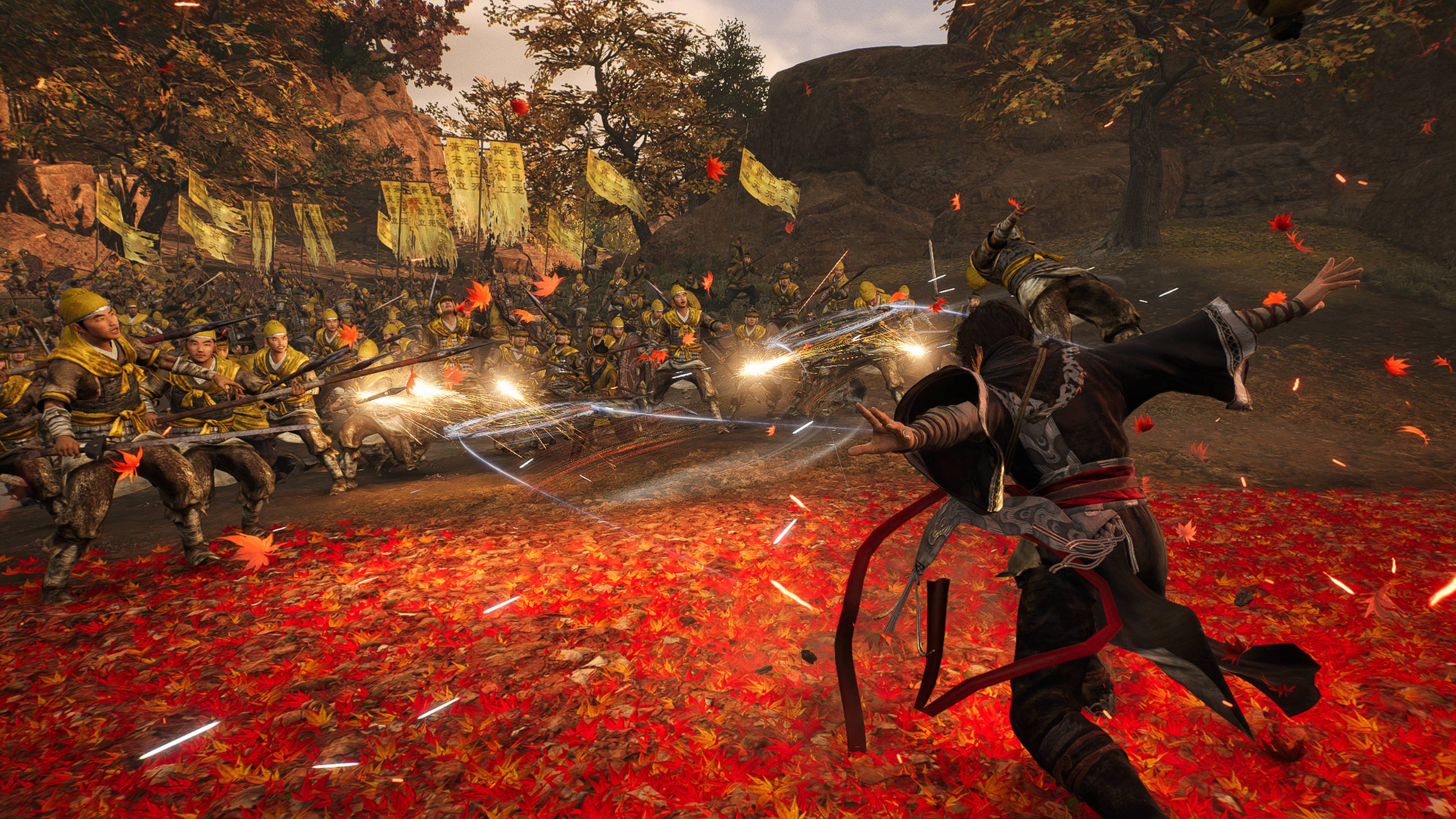
En *Dynasty Warriors: Origins *, la emoción del combate se extiende más allá de las batallas masivas contra las hordas de enemigos para incluir duelos individuales, una característica que primero cautivó a los fanáticos en *Dynasty Warriors 4 *y ahora regresa después de más de dos décadas. Los duelos se vuelven accesibles a partir del capítulo 2, pero no están disponibles contra cualquier enemigo. Solo puedes desafiar a los oficiales de alto rango y prominentes. Para iniciar un duelo, debe presionar rápidamente los botones R1 y L1 cuando surja la oportunidad al encontrar estas figuras clave.
Una vez que comienza un duelo, un círculo de soldados forma una arena a su alrededor, preparando el escenario para una confrontación individual enfocada e intensa. A diferencia del combate normal, un duelo presenta una mecánica única: una barra en la parte superior de la pantalla que rastrea el progreso de ambos combatientes. Cada éxito exitoso aterriza en tu oponente avanza tu parte de la barra, mientras que sus éxitos avanzan los suyos. El objetivo es llenar su lado del medidor por completo dañando a su oponente, ganando así el duelo.
Su posición inicial en el medidor de duelo no está influenciada por su salud actual, sino por su moral. Si estás dominando la batalla, tu barra comienza más adelante; Si estás luchando, el bar de tu oponente tendrá la ventaja. Durante el duelo, el juego estratégico es crucial. Debes observar los patrones de ataque de tu oponente, esquivar de manera efectiva y parar cuando sea necesario. Se recomienda mantener una distancia segura, especialmente si su adversario emplea artes de batalla poderosas. Recuerde, el tiempo es limitado, pero apresurarse en imprudente podría ser su caída.
Victoria en un duelo en * Dynasty Warriors: Origins * te otorga la capacidad de infligir daños significativos a tu oponente y aumenta la moral sustancialmente. Por el contrario, perder un duelo resulta en un gran daño para ti y una caída drástica en la moral de tu ejército, que puede ser catastrófica más adelante en una batalla. Si ninguna de las partes emerge como un claro ganador, el duelo simplemente termina sin repercusiones, y la batalla continúa como de costumbre. Sin embargo, algunos duelos son fundamentales e ineludibles; Perder esto lleva al fracaso de la misión, mientras que ganarlos asegura la victoria en la batalla. Por lo tanto, participar en un duelo puede cambiar drásticamente el curso de una batalla, pero subestimar a tu oponente podría conducir a consecuencias nefastas.
Y así es como funcionan los duelos en *Dynasty Warriors: Origins *. El juego ahora está disponible en PS5, PC y Xbox Series X/S, ofreciendo a los jugadores la oportunidad de experimentar esta característica estratégica y emocionante de primera mano.
 Últimas descargas
 Downlaod




 Las noticias más importantes









