

¡Otra semana, otro desafío * bitlife *! El desafío Mother Pucker de esta semana puede parecer simple, pero el tiempo y un poco de suerte son clave. Aquí está su guía completa para conquistarlo.
Bitlife Mother Pucker Challenge Tutorial
Las tareas de desafío de esta semana son:
- Nacer hombre.
- Trabaja como correo de correo por más de 15 años.
- Conectarse con más de 5 madres.
- Tener más de 3 hijos con aventuras.
- Asesina a tu propia madre.
Nacer hombre
¡Paso más fácil primero! Comience una nueva vida y elija hombre, use un personaje masculino existente o simplemente espere un nacimiento masculino en una vida aleatoria. Tu ubicación no importa. Si tiene paquetes de trabajo y el talento especial del crimen, tráelo. Esto aumenta sus posibilidades de éxito en la tarea final y un poco más arriesgada.
Trabajar como correo de correo por más de 15 años

Evite los problemas a medida que crece. Después de la escuela secundaria, busque "Mail Carrier" en los listados de trabajo de tiempo completo. Un registro limpio es esencial. Si no lo ve, sigue envejeciendo y revisando hasta que aparezca, está un poco basado en la suerte. Una vez contratado, quédese durante al menos 15 años (siga su progreso en los detalles del desafío).
Conectarse con más de 5 madres y tener más de 3 hijos con aventuras
Abordarlos juntos. Use la opción "Actividades> Amor> conectar" repetidamente. No sabrá si sus conexiones son madres, pero los intentos consistentes durante varios años deberían funcionar. Para los niños, omita el condón cada vez para aumentar sus posibilidades (tenga en cuenta que esto también aumenta su riesgo de ETS; visite a un médico o reza por una cura si es necesario). Sigue conectando hasta que ambas tareas estén completas; ¡Incluso podría ganar la cinta lujuriosa!
Asesina a tu propia madre
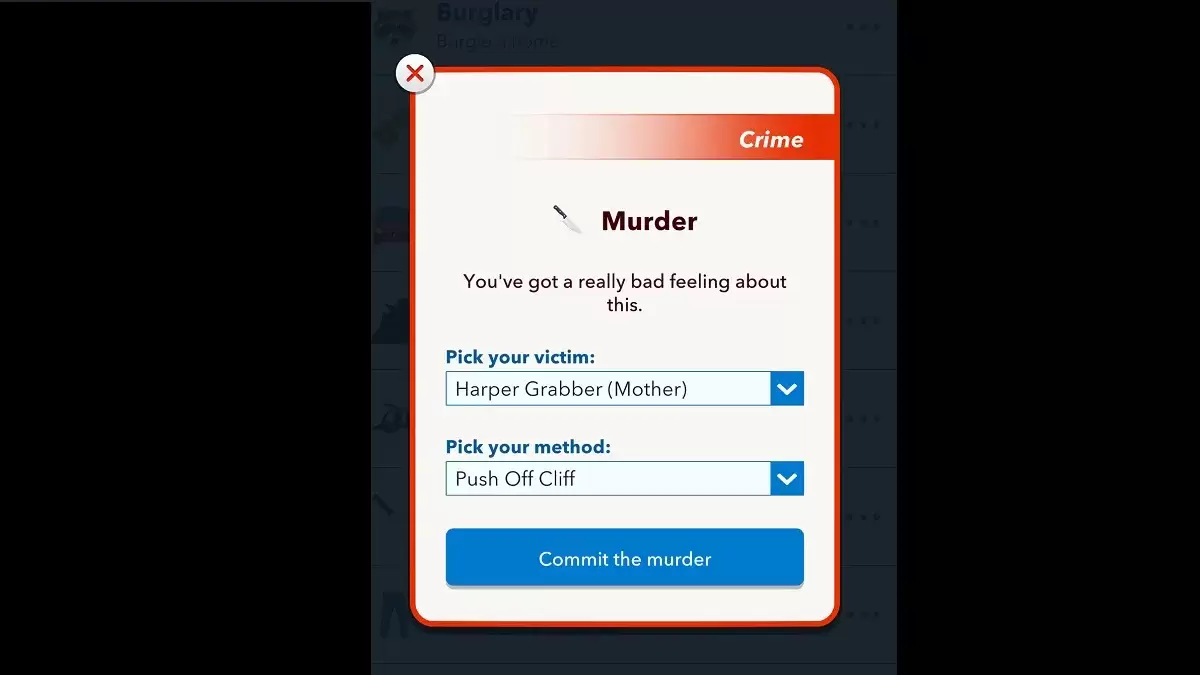
Guarde esto para el último debido al riesgo de encarcelamiento. El talento especial del crimen mejora significativamente sus probabilidades de éxito. Cuando esté listo, vaya a "Actividades> Crimen> Asesinato," Seleccione a su madre, elija su método y espere lo mejor. Si su madre muere antes de que esté lista, use viajes en el tiempo o comience una nueva vida.
¡Felicidades! Completar el desafío Mother Pucker desbloquea un elemento cosmético aleatorio (sombrero, gafas, etc.) utilizable en futuras vidas de bitlife .
 Últimas descargas
 Downlaod




 Las noticias más importantes









