

Ubisoft hat kürzlich die Systemanforderungen für die PC-Version von Assassins Creed Shadows offengelegt und die vorbestellte Phase gestartet, wodurch Spieler einen Einblick in das, was für diesen mit Spannung erwarteten Titel aufbewahrt wird, einen Einblicke gewährt hat. Für diejenigen, die ihr Gameplay-Erlebnis auf den Maximal abhalten möchten, hat Ubisoft eine Reihe von High-End-Funktionen eingeführt, die die Grafik und Leistung verbessern sollen:
- Ein integriertes Testwerkzeug für die Leistungsbewertung, mit der die Spieler ihre Einstellungen optimieren können.
- Unterstützung für Ultrawide -Formate, um ein eindringlicheres Spielerlebnis zu gewährleisten.
- Fortgeschrittene Nutzung von Skalierungs- und Rahmengenerierungstechnologien, einschließlich Intel Xess 2, Nvidia DLSS 3.7 und AMD FSR 3.1, die ein glatteres Gameplay bei höheren Auflösungen versprechen.
- Detaillierte erweiterte Grafikeinstellungen für diejenigen, die gerne ihre Grafiken perfekt optimieren.
- Unterstützung für dynamische Auflösung und HDR, wodurch die Welt mit atemberaubender Klarheit und Farbe zum Leben erweckt wird.
- Kompatibilität mit AMD Eyefinity und NVIDIA-Surround-Systemen, die sich mit Multi-Monitor-Setups befassen.
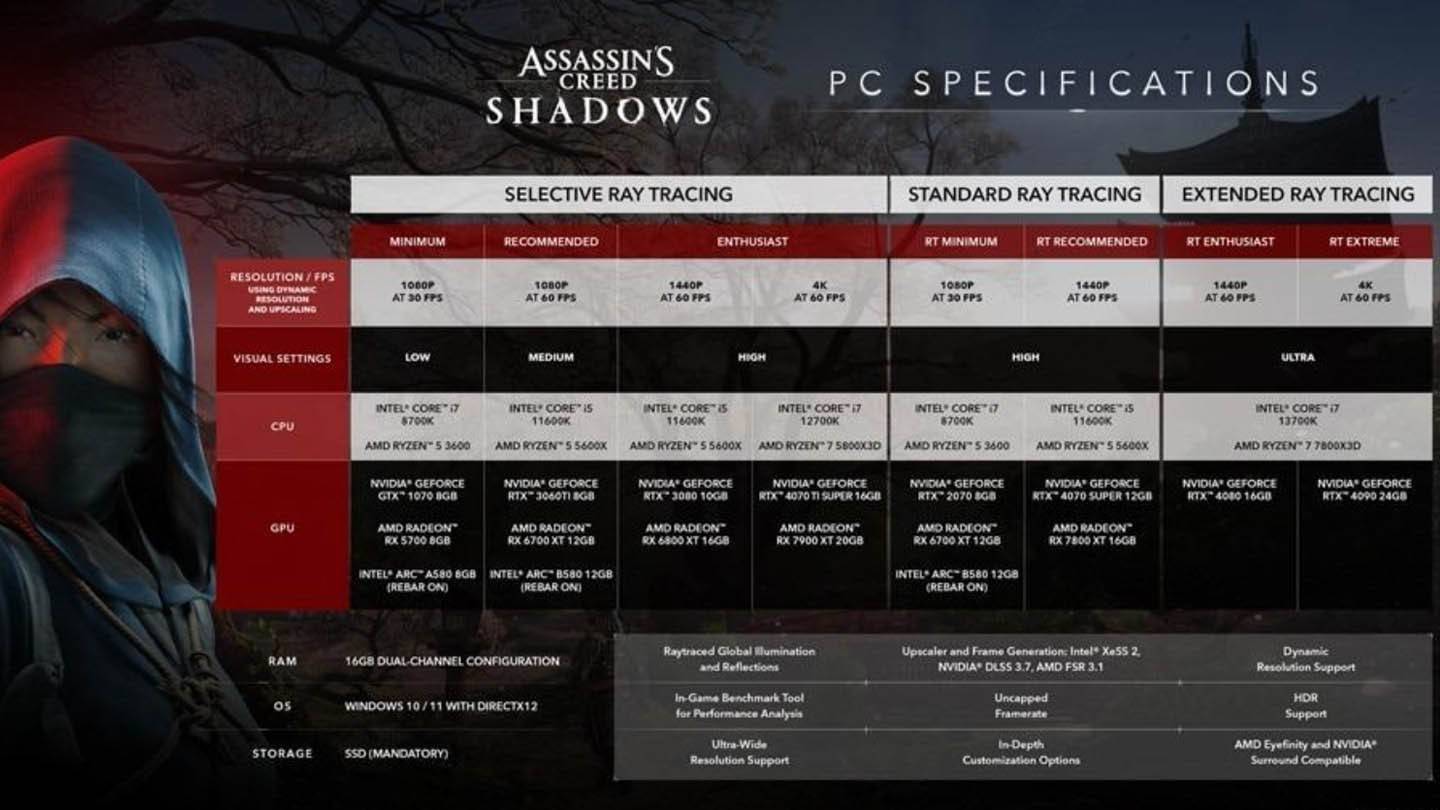 Bild: Ubisoft.com
Das Vorbestellen von Assassins Creed Shadows sichert nicht nur Ihre Kopie, sondern gewährt auch Zugriff auf die Krallen von Awaji Add-On, die später gestartet werden sollen. Dieser DLC verspricht über 10 Stunden zusätzlicher Inhalte und führt eine neue offene Welt zusammen mit neuen Fähigkeiten, Waffen und Ausrüstungen, die auf Naohe zugeschnitten sind.
Ubisoft hat auch den Animus Hub vorgestellt, ein neues Kontrollzentrum, das den Zugriff auf die Assassin's Creed -Serie optimieren soll. Der Animus Hub startet neben Assassins Creed Shadows und dient als zentrale Plattform für Fans, die in Ursprünge , Odyssey , Valhalla , Mirage und das kommende Hexe eintauchen können. Darüber hinaus führen Assassins Creed -Schatten einzigartige Missionen ein, die als Anomalien bezeichnet werden und direkt über den Hub zugänglich sind und der Serie eine zusätzliche Intrigen- und Konnektivitätsebene hinzufügen.
 Neueste Downloads
 Downlaod


 Top-Nachrichten









